
Top 8 AI Music Generators Compared: Which Creates the Best Tracks in 2026?
We tested every major AI music generator by creating the same song across all platforms. Here is our honest ranking based on audio quality, control, and usability.

Introduction: The AI Music Revolution
AI music generation has gone from a novelty to a genuinely useful creative tool in just two years. In 2026, you can describe a song in natural language and get back a fully produced track with vocals, instruments, and mixing — all in under 30 seconds. But the quality varies wildly between platforms. We spent six weeks testing every major AI music generator by creating identical songs across all platforms to give you a definitive, unbiased comparison.
Our Testing Methodology
We created five different songs across genres: pop, electronic, lo-fi hip hop, classical, and rock. Each song was generated on every platform using the same prompt. We then evaluated each output on audio quality, vocal realism, instrumentation accuracy, mixing quality, and overall musicality. We also rated each platform on ease of use, customization options, and pricing value.
1. Suno v4: The Undisputed Leader
Suno has consistently led the AI music space since its launch, and version 4 extends that lead significantly. The vocal quality is the most realistic we have heard from any AI music tool, and the instrumental arrangements are surprisingly sophisticated.
Strengths
- Best vocal realism by a wide margin — voices sound natural with proper breathing and emotion
- Excellent song structure — verses, choruses, bridges, and intros flow naturally
- Strong genre versatility — handles pop, rock, electronic, and acoustic equally well
- Built-in lyrics editor with rhyme and meter suggestions
- Active community sharing prompts and techniques
Weaknesses
- Can sometimes produce generic-sounding melodies
- Limited control over individual instrument tracks in the standard interface
- Extended songs beyond 3 minutes can lose coherence
- Free tier is very limited at 10 generations per day
2. Udio v2: The Audiophile Choice
Udio takes a different approach from Suno, focusing on audio fidelity and production quality. The resulting tracks often sound more polished and professionally mixed, though the vocal quality slightly trails Suno.
Strengths
- Superior mixing and mastering quality — tracks sound radio-ready
- Better instrumental separation and clarity
- More control over song sections and arrangement
- Higher quality audio export options including WAV and FLAC
- Excellent for electronic and ambient genres
Weaknesses
- Vocal quality is good but not as natural as Suno
- Pop and rock genres are less convincing than electronic
- Smaller community means fewer shared prompts and techniques
- Pricing is slightly higher than competitors
3. MusicFX by Google: Best Free Option
MusicFX by Google DeepMind is the best free AI music generator available. While it cannot generate vocals and is limited to 30-second clips, the instrumental quality is impressive for a free tool.
4-8: The Rest of the Field
Several other platforms are worth mentioning for specific use cases, though none match Suno or Udio for full song generation.
AIVA — Best for Classical and Soundtrack Music
AIVA has been around since 2016 and specializes in classical, cinematic, and soundtrack music. It uses a different technical approach that produces more musically coherent compositions for orchestral genres. It cannot generate vocals and is best suited for background music for videos, games, and podcasts.
Soundraw — Best for Loop-Based Production
Soundraw takes a different approach: instead of generating a complete song, it creates individual loops and phrases that you arrange manually. This gives you more control but requires more musical knowledge. It is excellent for producers who want AI-generated raw material to incorporate into their workflow.
Boomy — Best for Beginners
Boomy offers the simplest interface of any AI music tool. You choose a genre, adjust a few sliders, and get a complete track in seconds. The quality is lower than Suno or Udio, but the ease of use makes it perfect for people who have never made music before.
Mubert — Best for Commercial Licensing
Mubert focuses on the business side of AI music. It offers clear commercial licensing, API access for integration into apps and games, and a content ID system to avoid copyright disputes. The music quality is good but not industry-leading.
Beatoven.ai — Best for Video Creators
Beatoven is designed specifically for content creators who need background music for videos. You can specify the mood, duration, and tempo to match your video. The integration with video editing workflows makes it particularly useful for YouTubers and social media creators.
Comparison Table
- Suno v4 — Overall: 9/10, Vocals: 10/10, Production: 8/10, Value: 8/10
- Udio v2 — Overall: 8/10, Vocals: 8/10, Production: 9/10, Value: 7/10
- MusicFX — Overall: 6/10, Vocals: N/A, Production: 7/10, Value: 10/10
- AIVA — Overall: 7/10, Vocals: N/A, Production: 7/10, Value: 7/10
- Soundraw — Overall: 6/10, Vocals: N/A, Production: 6/10, Value: 6/10
- Boomy — Overall: 5/10, Vocals: 5/10, Production: 5/10, Value: 8/10
- Mubert — Overall: 6/10, Vocals: N/A, Production: 6/10, Value: 8/10
- Beatoven — Overall: 5/10, Vocals: N/A, Production: 5/10, Value: 7/10
Prompt Writing Tips for Better Results
The quality of your AI music depends heavily on how you write your prompt. Here are techniques that consistently produce better results across all platforms.
- Specify the genre and sub-genre precisely: "indie pop with dreamy synth pads" not just "pop song"
- Describe the tempo and energy level: "mid-tempo at 110 BPM with a relaxed but groovy feel"
- Reference specific artists for style: "in the style of Tame Impala meets Daft Punk"
- Define the structure: "2-minute verse, 30-second pre-chorus, explosive chorus, bridge, final chorus"
- Mention specific instruments: "driven by a fuzzy bass line with 808 drums and shimmering arpeggios"
- Describe the mood: "nostalgic but hopeful, like remembering a summer from childhood"
Copyright and Legal Considerations
AI-generated music exists in a legal gray area. Most platforms grant you commercial rights to music you generate on paid plans, but the legal landscape is still evolving. Here is what you need to know.
- Paid plans generally grant full commercial rights to generated music
- Free plans usually restrict commercial use
- You cannot copyright AI-generated music in most jurisdictions
- If two users generate similar songs independently, neither owns exclusive rights
- Using AI music in monetized YouTube videos is generally accepted but check each platform terms
- For sync licensing in film and TV, consult an entertainment lawyer
Common Mistakes to Avoid
- Using vague prompts like "make a good song" — specificity is everything
- Not iterating — your first generation is rarely your best, generate 10-20 variations
- Ignoring genre conventions — AI music works best when you guide it with musical knowledge
- Not post-processing — even the best AI tracks benefit from basic EQ and compression
- Assuming all platforms produce the same quality — they do not, choose wisely for your genre
- Uploading AI music to Spotify without understanding the terms of service
Conclusion
AI music generation in 2026 is genuinely impressive. Suno v4 is the best all-around choice for full songs with vocals. Udio v2 is the audiophile pick for electronic and production-heavy genres. MusicFX is the best free option for instrumental clips. The technology will continue to improve rapidly, but even at its current level, it is a legitimate creative tool for musicians, content creators, and anyone who needs custom music without hiring a composer.
Frequently Asked Questions
Join the Discussion
Comments are coming soon. Share this article on social media.
Related Articles

Perplexity AI vs ChatGPT: Which Is Better for Research?
A detailed comparison of Perplexity AI and ChatGPT for research tasks.
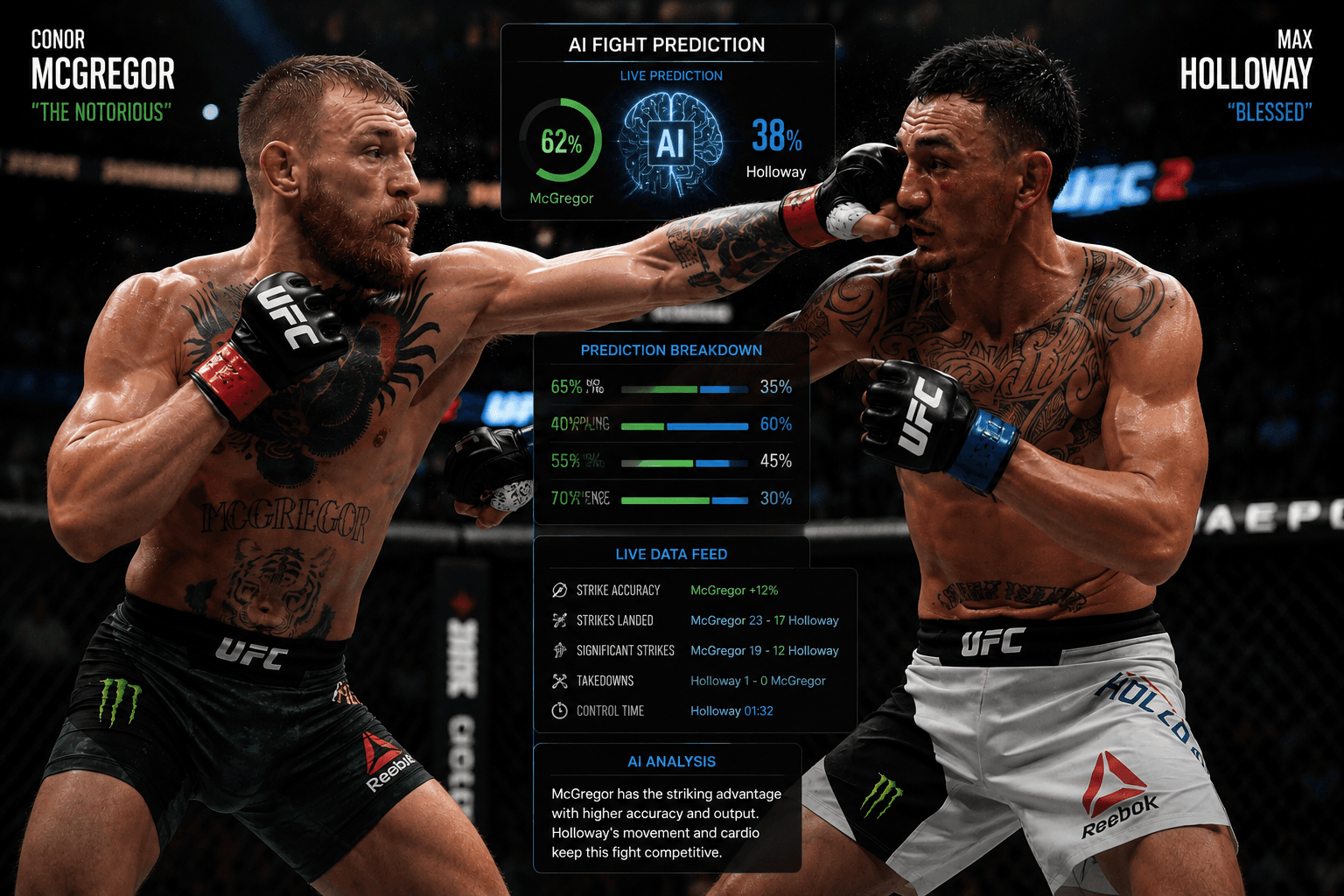
What If? AI Predicts the Outcome of the McGregor vs. Holloway Rematch That Never Happened
The UFC "what if" story of Conor McGregor vs. Max Holloway II is finally settled by Artificial Intelligence. See the data, simulation, and final verdict.

AI Coding Agents: Are they my new teammate or just a fancy tool?
A student developer’s perspective on how Agentic AI is changing the way I write code and manage my projects.